
Aluminum Foils
Aluminum Foils
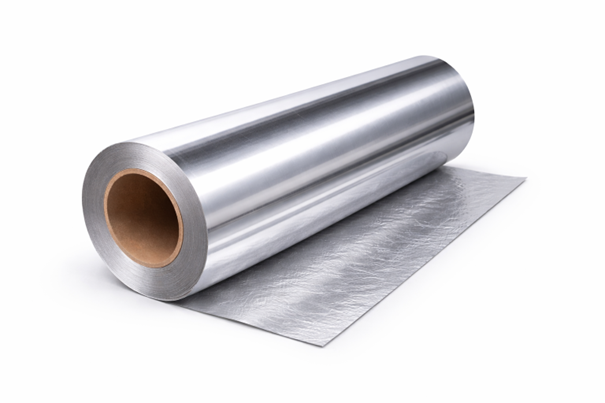
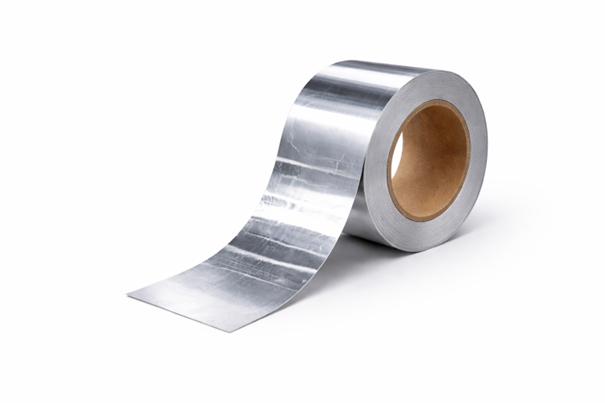
Product Description
Aluminum foils are versatile, thin metallic materials used across a wide range of industrial applications where thermal control, vapor barrier performance, and lightweight structural layers are required. With excellent thermal conductivity and reflective properties, aluminum foils enhance insulation systems and contribute to energy efficiency. Supplied in a variety of thicknesses and widths, these foils are suitable for lamination, coating, and surface protection applications in industrial environments.
Key Features
- Excellent thermal conductivity and radiant heat reflection
- Lightweight and durable material for industrial systems
- Suitable for lamination with insulation materials and composite structures
- Acts as an effective vapor barrier in insulation applications
- Available in various alloy and temper options to suit application needs
Typical Applications
- Vapor barriers in insulation systems for piping and ducting
- Facing layers for thermal insulation panels
- Protective surface layers in composite builds
- Energy systems and building services insulation interfaces
Technical Data
Parameter | Aluminum Foil |
Product Type | Technical aluminum facing |
Thickness Range | 6 – 50 micron (Typical) |
Alloy / Temper | Industry standard aluminum alloys (typical) |
Surface Finish | Plain / coated / laminated |
Barrier Function | Vapor & gas barrier; radiant heat reflection |
Key Performance Features | High reflectivity, low weight, malleability, thermal barrier |
Resin / Laminate Compatibility | Compatible with bitumen, scrim, insulation materials |
Typical Uses | Insulation facings, vapor barriers, composite insulation panels, sealed joints |
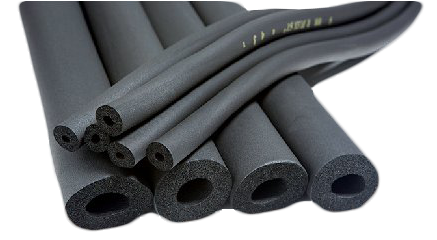
Elastomeric rubber pipe insulation is a flexible, durable solution specifically designed for HVAC systems, providing superior thermal efficiency and condensation control. Commonly used in heating, ventilation, and air conditioning applications, this material minimizes heat loss in pipes, ensures consistent system performance, and prevents moisture buildup that can lead to corrosion. Its closed-cell structure offers excellent resistance to water vapor, while its flexibility allows easy installation in tight spaces. Elastomeric rubber insulation is an ideal choice for extending the lifespan and efficiency of HVAC systems, contributing to overall energy savings and reduced maintenance costs.
Attribute | Pipe Insulation | Sheet Insulation |
Diameter Range | 6-114 mm | N/A |
Thickness Range | 6-50 mm | 6-50 mm |
Thermal Conductivity | 0.034 W/mK (at 0°C) | 0.034 W/mK (at 0°C) |
Temperature Range | -50°C to +110°C | -50°C to +110°C |
Water Vapor Permeability | ≤0.15 (µ-factor ≥ 10,000) | ≤0.15 (µ-factor ≥ 10,000) |
Fire Class | B-s3, d0 (EN 13501-1) | B-s3, d0 (EN 13501-1) |
Lamination Options | Unfaced, ALU | Unfaced, ALU |
Applications | HVAC piping, refrigeration | Ductwork, large surfaces |
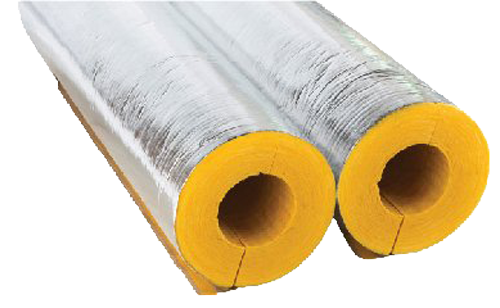
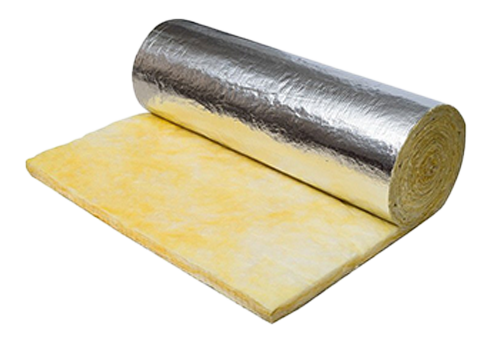
Glass wool insulation is a versatile, high-performance solution for HVAC systems, available in blanket, board, and pipe formats. It provides excellent thermal and acoustic insulation, making it ideal for ducts, air handling units, and piping. The material’s lightweight and flexible structure allows for easy installation, adapting well to various shapes and reducing heat transfer effectively. Glass wool also offers sound-dampening qualities, enhancing indoor comfort. With high fire resistance and moisture control, glass wool insulation contributes to safer, more efficient HVAC systems, promoting energy savings and improved system durability.
Glass wool is suitable for applications with moderate temperature ranges, generally up to 250°C, and is often used in residential and light commercial HVAC systems.
Feature | Duct-Wrap | Board |
Thickness | 25, 40, 50 mm | 25, 50, 100 mm |
Thermal Conductivity (λ) | 0.032 W/(m·K) at 10°C | 0.034 W/(m·K) at 10°C |
Thermal Resistance (R) | Varies by thickness; e.g., 0.75 (m²·K)/W at 25 mm | 0.7 to 2.9 (m²·K)/W depending on thickness |
Fire Resistance Class | A1 Non-combustible | A1 Non-combustible |
Max Service Temp | Up to 250°C | Up to 250°C |
Water Absorption | ≤1 kg/m² | ≤1 kg/m² |
Acoustic Insulation | High | High |
Certifications | EUCEB, EPD | EUCEB, EPD |
Feature | ODE Starflex Pipe |
Diameter Range | 1/2″ to 12″ |
Thickness Range | 25, 30, 40, 50,60,80,100 mm |
Thermal Conductivity (λ) | 0.033 W/(m·K) at 10°C |
Thermal Resistance (R) | Varies by thickness and diameter |
Fire Resistance Class | A1 Non-combustible |
Max Service Temperature | Up to 250°C |
Water Absorption | ≤1 kg/m² |
Lamination Options | Unfaced, ALU |
Acoustic Insulation | High |
Certifications | EUCEB, EPD |
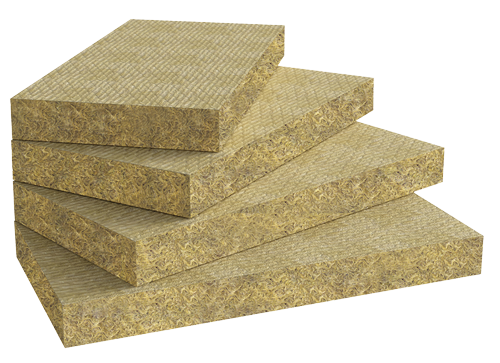
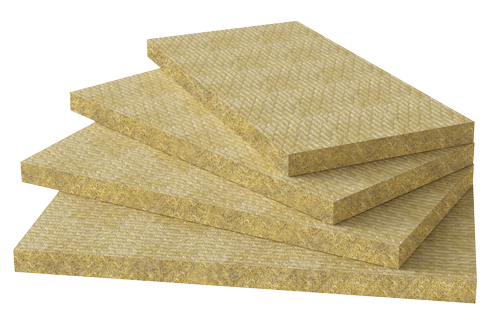
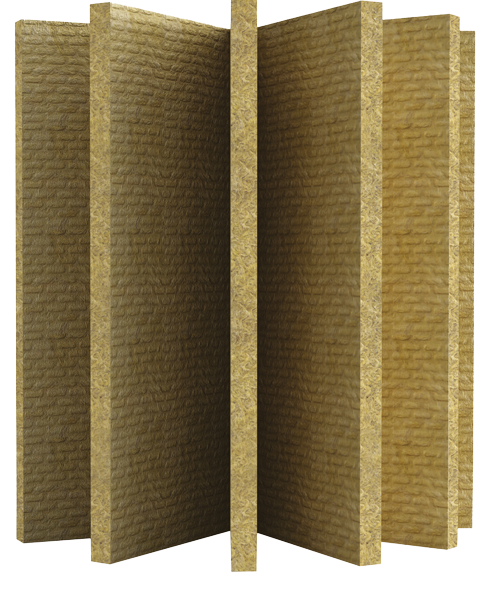
Stone wool insulation, available in blanket, board, and pipe formats, is a durable and highly effective choice for HVAC systems, offering superior thermal, acoustic, and fire-resistant properties. Commonly used in ductwork, piping, and air handling units, stone wool minimizes heat loss, enhances energy efficiency, and reduces noise levels within HVAC systems. Its non-combustible nature adds an essential layer of fire safety, while its moisture-resistant structure prevents mold growth. Stone wool insulation contributes to a long-lasting, efficient HVAC system, making it an ideal choice for both commercial and residential applications.
Stone wool can withstand higher service temperatures, typically up to 750°C, making it ideal for high-temperature ducts, industrial piping, and systems requiring fire resistance. Its non-combustible nature also adds critical fire safety.
Attribute | Stone Wool Board | Stone Wool Blanket ( Wire mesh) |
Density | 40-200 kg/m³ | 70-150 kg/m³ |
Thickness Range | 40-180 mm | 30-120 mm |
Thermal Conductivity | 0.033 – 0.040 W/mK | 0.035 – 0.042 W/mK |
Temperature Range | Up to 750°C | Up to 750°C |
Fire Class | Non-combustible, A1 (EN 13501-1) | Non-combustible, A1 (EN 13501-1) |
Lamination Options | Unfaced, ALU, BGT | Unfaced, ALU, BGT |
Applications | HVAC ducts, walls, and partitions | HVAC ducts, pipes, and boilers |